|
| |
Safe Streets! Open Trails!
Note from the editor: I just finished enjoying a delightful book that John Whiteley
reviewed in The Tailwind several years ago and I couldnt resist passing
excerpts from one chapter. I feel so strongly that including bicycles as an integral part
of our lives will bring benefits to all yet I constantly see resistance. We have come a
long way but have so far to go. Daisy
Excerpts from Over the Hills
by David Lamb (1996)
I dont want to make too much of this bicycling thing. The bicycle
is not the salvation of a polluted, congested planet, as some of its activist advocates
would have us believe
.. But with our cities car-clogged and traffic slowing to a
crawlby the year 2000 the average Los Angeles resident will spend five to seven
hours a week stalled in traffic jams, the U.S. government saysthere are a few
considerations worth noting:
If 10% of the nations car commuters switched to
bicyclesor a combination of bicycles and public transitour annual fuel bill
for imported oil would drop by more than $1 billion.
Bicycling to work would save the average car commuter 400 gallons of
gasoline a year. Using a bike just to get to the bus or rail station would save 150
gallons.
Building a downtown parking structure can cost $30,000 per car space;
a bike locker costs $200. Put another way, eighteen bicycles can park in the space used by
one car.
In traffic, thirty bicycles can move through the highway area
devoured by one car. They emit no pollutants, use no fuel, cause no traffic jams.
It takes two lanes of a given size, writes Ivan Illich, in Energy
and Equity, to move forty thousand people across a bridge in one hour using modern
trains. By bus, it takes four lanes; by car, twelve. Forty thousand bicyclists need only
one.
Americans drive 2.2 trillion miles a year, the equivalent of
eighty-eight times around the globe. We spend $70 billion annually on transportation
infrastructure, yet were falling behind: Our bridges need repair, and so do our
highways. Our airports are outdated, our rail beds as antiquated as Zaires. New York
City collects $800 million a year from fuel taxes, tolls and other transportation fees and
still cant match what it spends to maintain its crumbling roads. Traditionally
federal and state governments have had a simple response to the crisis caused by our
dependence on the automobile; Build more roads. "We cannot solve the problems that we
have created," Albert Einstein once said, speaking of something other than traffic
congestion, "with the same thinking that created them," yet few of us, myself
included, could imagine life without the freedom to pack up our cars any darn time we want
and discover where the road goes.
..Unlike Japan, where a quarter of all daily passenger trips in
Tokyo are by bicycle, or Denmark, where a third of the adult population bikes to work,
bicycles have not made the transition in the United States from recreational vehicle to
utilitarian transporter because most people perceive them as offering an unsafe,
inconvenient way to get around
.But a Harris Poll, commissioned by Bicycling
magazine in 1991, said that the number of occasional and regular bike commuters would rise
tenfold, to over 35 million, if "bike-friendly" transportation systems
existedsafe bike lanes, facilities to park and lock bikes, showers at the work site,
city busses with bike racks to integrate biking and public transport. Others have reached
similar conclusions.
Half of all car trips in the United States are under five miles, so the
likelihood that the bicycle could play a significant role in the transportation systems of
the twenty-first century may not be as pie-in-the-sky as it sounds
..Southern
Californias air-quality program mandates that all companies with a hundred or more
employees implement plans to get workers out of their cars and onto bicycles or into
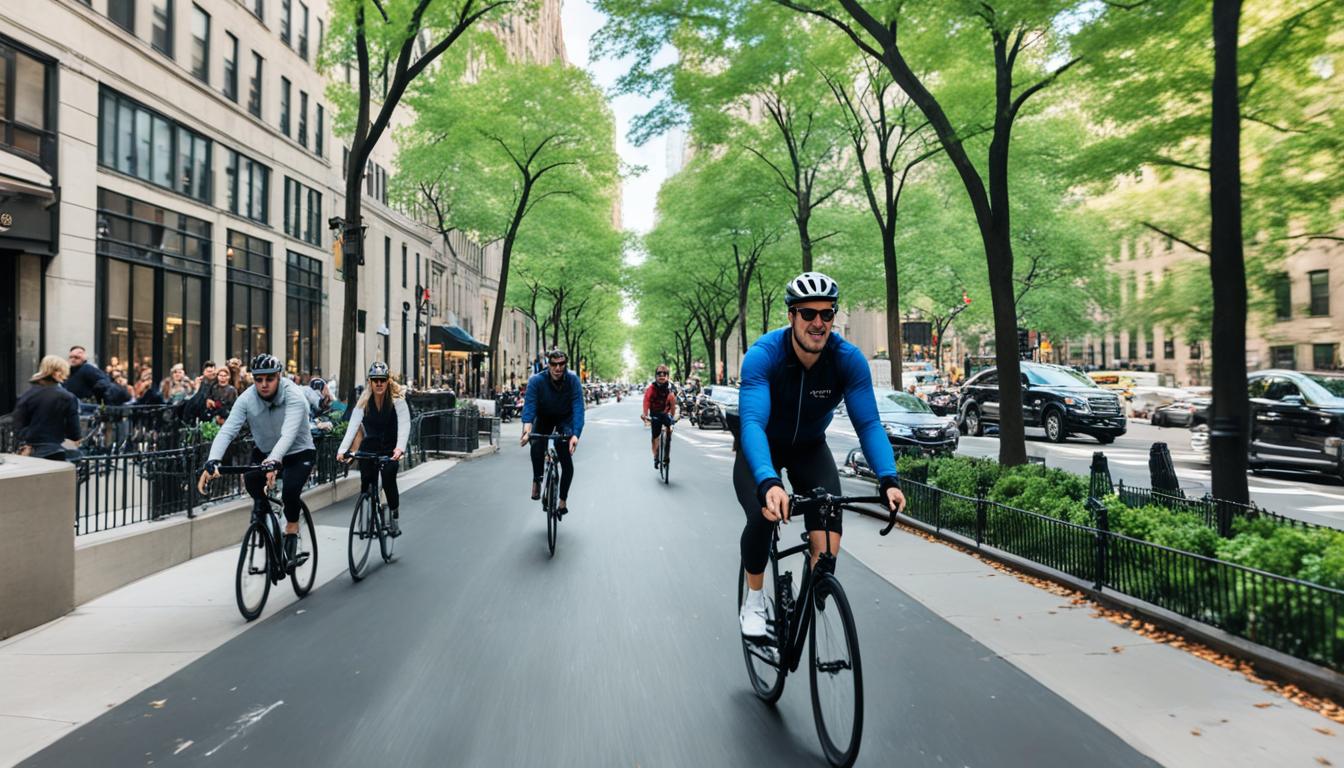
public transport. And in city after city, the bicycle is carving out a niche in the
futures transportation system
..
From my vantage point above the San Fernando Valley, I could see eight
lanes of traffic moving as in a single convoy along the Foothill Freeway. A blanket of
smog blocked the sunlight. I wasnt kidding myself, though. I wasnt going to
return home and give up my car. I wasnt going to come back to Los Angeles in twenty
years and find everyone on bicycles. The bicycle is not the solution to the crises posed
by our romance with the automobile. But its part of the
solution.
|